Warhammer 40k 11th Edition: Everything You Need to Know About the New Rules
- Servitor Scribe

- 1 day ago
- 5 min read
The grimdark future just got a whole lot more interesting. Games Workshop dropped the biggest bombshell of AdeptiCon 2026 when they officially unveiled Warhammer 40,000 11th Edition — and if you've been paying attention to the hobby space, you already know the community has been buzzing non-stop ever since. With a June 2026 launch locked in and the "Warhammer 40,000: Armageddon" starter box confirmed, this is shaping up to be one of the most exciting edition transitions in the game's history.
Whether you're a grizzled veteran who remembers painting metal Space Marines by candlelight or a relative newcomer still figuring out which end of a bolter to point at the enemy, this guide breaks down every major rules change coming in Warhammer 40k 11th Edition — and why you should be genuinely excited.

The Armageddon Starter Set: Blood Angels vs. Orks
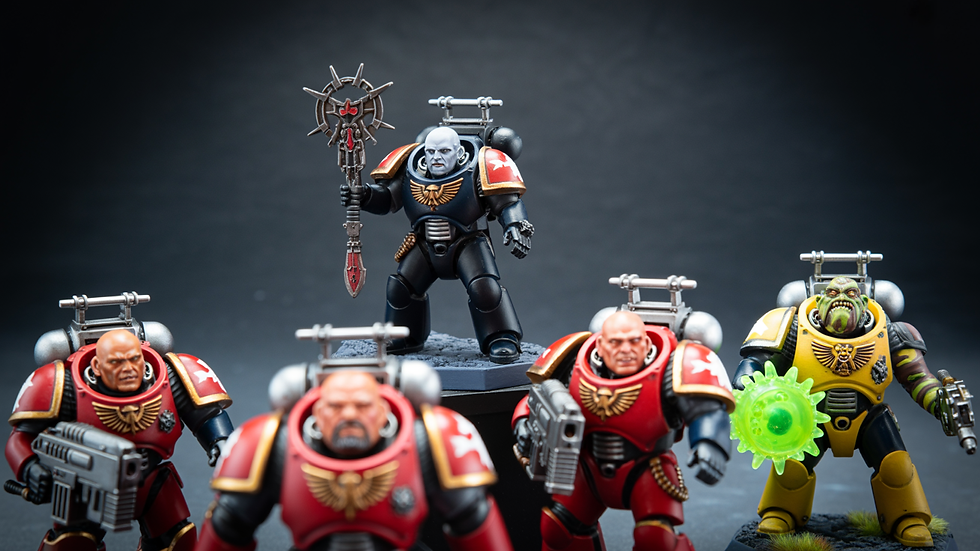
Let's start with the box that's going to be sitting on every hobby shop shelf this summer. The "Warhammer 40,000: Armageddon" launch set is reportedly the largest starter box Games Workshop has ever produced for 40k, rumoured to retail around $299 USD. Inside you'll find two full starter armies of brand-new push-fit miniatures: Blood Angels Space Marines on one side, and a fresh wave of Orks on the other.
The narrative framing is pure grimdark gold. Following the events of Armageddon: The Return of Yarrick, the legendary Commissar has called for aid as Wazdakka Gutzmek's Ork vanguard tears across the planet ahead of Ghazghkull's main force. Operation Imperator brings a coalition of Space Marine Chapters — Blood Angels, Salamanders, Ultramarines, and Space Wolves — to the planet's defence. It's the kind of lore setup that makes you want to immediately start painting.
New models confirmed for the box include a Jump Chaplain, updated Vanguard Veterans with new jump packs, Intercessors sporting a mix of Mk X Tacticus armour and classic Mk 7 helmets (a brilliant narrative touch suggesting battlefield salvage), and on the Ork side: a new Warboss, a long-overdue plastic Weirdboy replacing an 18-year-old Finecast relic, and revamped Ork Boyz who can now carry both a Shoota and a Choppa simultaneously. Finally.
Terrain as Objectives: The Biggest Gameplay Shift
If there's one rules change that's going to fundamentally alter how you play Warhammer 40k 11th Edition, it's this one. Those familiar round objective markers? Gone. In their place, terrain pieces on the tabletop become the primary objective points.
This is a massive shift in how battles are fought. Instead of racing to park a unit on a 40mm circle, you're now fighting over ruins, bunkers, and strategic installations — the actual physical features of the battlefield. It creates a more cinematic, narrative feel to every game, and it means terrain placement at the start of a match suddenly matters enormously. Competitive players are going to need to completely rethink their deployment strategies.
The terrain rules themselves have also been overhauled. Cover now debuffs the enemy's Hit roll (imposing -1 to Ballistic Skill) rather than buffing your armour saves. Only Infantry, Swarms, and Beasts benefit from this within terrain areas, which keeps elite armoured units from hiding behind a wall and becoming untouchable.

The Stay Hidden Rule and Detection Range
Speaking of cover, 11th Edition introduces a genuinely clever new mechanic: the "Stay Hidden" rule. Infantry, Swarms, or Beast units that are within a terrain area and did not shoot in their last turn cannot be targeted by enemy models more than 15 inches away. Games Workshop is calling this the "Detection Range" system.
This rewards patient, tactical play. A unit of Scouts or Infiltrators that holds fire can become effectively invisible to long-range firepower. It's going to make certain armies — particularly those built around stealth and ambush — significantly more viable, and it adds a layer of decision-making to every shooting phase. Do you fire and reveal your position, or stay hidden and wait for the perfect moment?
Modular Detachments: Army Building Gets a Massive Upgrade
The Detachment system is getting the most significant overhaul since it was introduced. In 11th Edition, players can combine multiple detachments using a new "Detachment Points" system. Each detachment costs 1-3 points based on its power and scope, and you have a pool of points to spend when building your army.
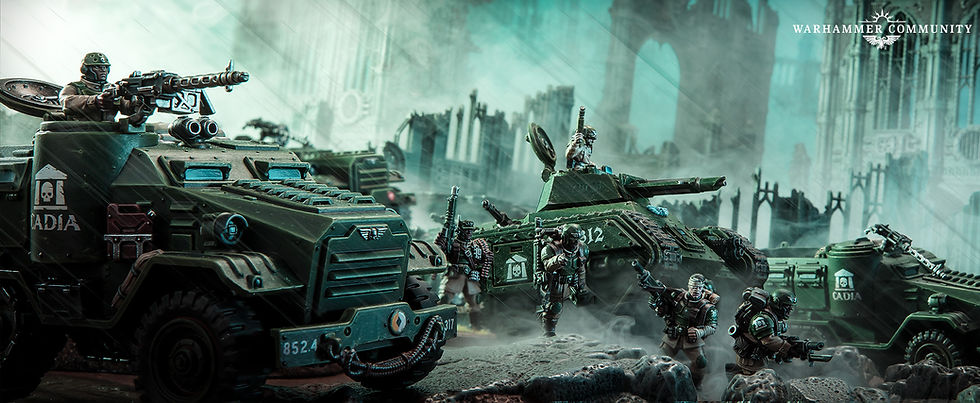
Games Workshop is launching with over 70 new and updated detachments at release. This is a staggering number, and it means the army-building possibilities are genuinely enormous. Want to run a Blood Angels force that combines their signature assault doctrine with a specialist Vanguard element? There's a detachment combination for that. Prefer a mechanised Astra Militarum list that layers armour support with infantry screening? Build it.
One important note for existing players: all current 10th Edition codexes remain valid at launch. You won't need to buy new books on day one, which is a genuinely player-friendly decision from Games Workshop.
Stratagem Stacking Is Dead — Long Live Stratagems
If you've ever sat across the table from someone who stacked four stratagems on a single unit to create an unkillable murder machine, you'll appreciate this change. In 11th Edition, only one stratagem can be used on a unit per phase. Full stop.
This single rule change is going to have enormous ripple effects on the competitive meta. Many of the most oppressive tournament builds in 10th Edition relied on stratagem stacking to create situations that felt unfair and unfun. Removing that option forces players to make genuine tactical decisions rather than simply activating a pre-planned combo.
Charge Mechanics and the Fight Phase Refresh
The Fight Phase is getting a quality-of-life overhaul that should make melee combat feel cleaner and more dynamic. The most notable change: you now roll your charge dice first, then pick your targets within range. This eliminates the frustrating situation where you declare a charge, roll poorly, and fail to reach any of your intended targets.
Pile-in and consolidation moves are being streamlined and combined, and combat disembarkation is making a comeback — units can now disembark from transports within engagement range and immediately pile into combat, though they'll be Battleshocked as a consequence. It's a high-risk, high-reward option that's going to create some spectacular moments on the tabletop.
Dynamic Mission Generation: Your Army Shapes the Battle
Perhaps the most innovative new system in 11th Edition is dynamic mission generation. Missions are now generated based on the armies in play, with each player having their own primary objectives influenced by their army's "Force Disposition."
The five Force Dispositions are: Take and Hold, Purge the Foe, Disruption, Reconnaissance, and Priority Assets. Choose your disposition during list building, and your primary objectives will reflect it. Two players with different dispositions will often be playing asymmetrical missions — one trying to hold ground while the other tries to eliminate enemy units. It's a brilliant system that rewards thematic army building and creates genuinely varied games.
What This Means for Your Collection
Here's the good news: your existing models aren't going anywhere. All 10th Edition codexes remain valid, and Games Workshop has confirmed that upcoming books will also be compatible with 11th Edition. New codexes will roll out over the edition cycle, but you won't be left behind on day one.
The first 11th Edition codexes will be for Orks and Space Marines, tied directly to the launch box. Adeptus Custodes and T'au are rumoured as strong early candidates, with Drukhari and Dark Angels following later in the cycle.
The Verdict: Should You Be Excited?
Absolutely. Warhammer 40k 11th Edition looks like a thoughtful, player-focused update that addresses many of the frustrations of 10th Edition without throwing the baby out with the bathwater. The terrain-as-objectives system, the Stay Hidden mechanic, the stratagem stacking fix, and the dynamic mission generation all point to a design team that has been listening to the community.
The Armageddon theme is evocative, the new models look stunning, and the modular detachment system promises the most flexible army building the game has ever seen. June 2026 cannot come soon enough.
Start hoarding those paint pots, Servitors. The new edition is almost upon us.